Choosing the Right Social Media for Small Businesses in 2026: The Complete Guide.
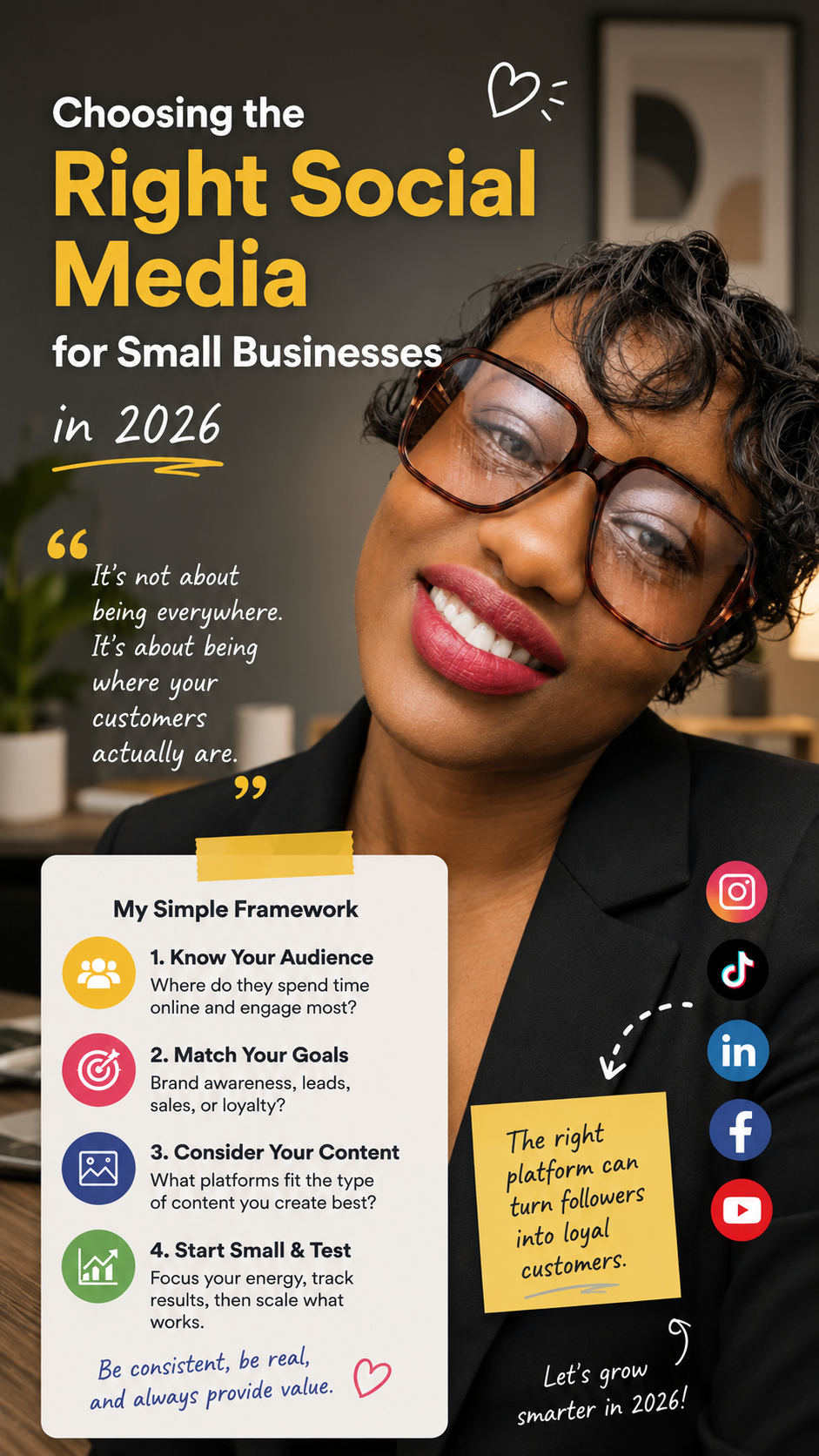
Social media continues to be one of the most powerful and cost-effective marketing channels available to small businesses. However, with new platforms emerging, changing algorithms, and evolving consumer behaviours, choosing the right social media platform in 2026 requires a strategic approach.
Many small business owners make the mistake of trying to be everywhere at once. The reality is that success comes from focusing on the platforms where your target audience spends the most time and where your content can deliver the greatest impact.
Why Social Media Marketing Matters for Small Businesses
Social media is no longer just a branding tool. It has become an essential business growth channel that helps businesses.
- Increase brand awareness
- Generate qualified leads
- Build customer relationships
- Improve customer service
- Drive website traffic
- Increase online sales
- Establish industry authority
With billions of active users worldwide, social media provides small businesses with opportunities to compete alongside larger brands without requiring massive marketing budgets.
How to Choose the Right Social Media Platform:
- Understand Your Target Audience
The most important consideration is understanding where your customers spend their time online.
Ask yourself:
- What age group are you targeting?
- What are their interests?
- What type of content do they consume?
- Which platforms do they use daily?
For example:
- Younger audiences often engage heavily with TikTok and Instagram.
- Professionals and B2B decision-makers are more active on LinkedIn.
- Local communities frequently engage through Facebook groups.
- Visual brands perform exceptionally well on Instagram and Pinterest.
- Define Your Marketing Goals
Different platforms support different objectives:
- Brand Awareness: Instagram, TikTok, Facebook, and YouTube
- Lead Generation: LinkedIn, Facebook, Instagram
- Website Traffic: Facebook, LinkedIn, and Pinterest
- E-commerce Sales: Instagram, TikTok shop, Facebook Marketplace and Pinterest
Each platform requires different content formats. Consider whether you can consistently create short-form videos, long-form videos, images, infographics, articles and live streams.
Certain industries naturally perform better on specific channels; do more research about the right channels.
Best Social Media Platforms for Small Businesses in 2026
Despite increased competition, Facebook remains highly valuable for local businesses.
Benefits: Large user base, local community groups, advertising capabilities, event promotion, and customer communication.
Best for: Local businesses, Service providers, restaurants, and Retail stores
Instagram remains a leading platform for visual storytelling and brand building.
Benefits: Reels and Stories, Product tagging, Influencer collaborations, Strong engagement
Best for: Fashion, Beauty, Fitness, food, and Lifestyle brands
LinkedIn is the top platform for B2B marketing and professional networking.
Benefits: Business credibility, Lead generation, Industry authority, Recruitment opportunities
Best for: Consultants, agencies, and B2B companies
- TikTok
TikTok continues to drive massive organic reach and consumer engagement.
Benefits: Viral potential, Authentic content, Low-cost brand awareness, and Younger audience engagement
Best for: Consumer brands, Startups, Retail businesses, Entertainment
- YouTube
Video content remains a dominant force in digital marketing.
Benefits: Long-term visibility, Search engine exposure, Educational content, Strong ROI
Best for: Tutorials, Product demonstrations, Service explanations, Thought leadership
Pinterest functions more like a visual search engine than a traditional social network.
Benefits: Long content lifespan, Website traffic generation, purchase-intent audience
Best for: Home décor, DIY, Fashion, Food, Weddings
Social Media Marketing Strategy for Small Businesses
1: Set Clear Objectives
- Increase followers by 20%
- Generate 50 leads per month
- Increase website traffic by 30%
- Improve customer engagement
2: Develop a Content Plan
Balance content using the 80/20 rule:
- 80% value-driven content
- 20% promotional content
Examples include:
- Educational posts
- Customer success stories
- Behind-the-scenes content
- Industry news
- Product updates
3: Create a Posting Schedule
Consistency matters more than frequency.
Recommended posting frequency:
- Facebook: 3–5 times weekly
- Instagram: 4–7 times weekly
- LinkedIn: 2–5 times weekly
- TikTok: Daily if possible
- YouTube: Weekly
4: Engage With Your Audience
Successful social media marketing is a conversation, not a broadcast.
Respond to the following: Comments, Reviews, Messages, Mentions
Engagement helps build trust and improves visibility.
5: Measure Performance
Track metrics such as reach, Engagement rate, Click-through rate, Lead generation, Conversions, Return on investment (ROI)
Use platform analytics to identify what works and adjust your strategy accordingly.
Common Social Media Mistakes to Avoid
- Trying to Be Everywhere: Focus on the platforms that align with your audience and goals.
- Posting Without a Strategy: Random content rarely delivers consistent results.
- Ignoring Analytics: Data reveals what your audience actually wants.
- Being Overly Promotional: Too many sales-focused posts can drive followers away.
- Inconsistent Posting: Consistency builds audience trust and platform visibility.
- Ignoring customer messages: Slow response times can damage your reputation.
- Following Trends Without Relevance: Only participate in trends that align with your brand identity.
Several emerging trends are shaping the future of social media marketing:
- AI-Powered Content Creation: Businesses are using AI tools to improve efficiency while maintaining authenticity.
- Short-Form Video Dominance: Reels and TikTok videos continue to generate the highest engagement.
- Social Commerce Expansion: More purchases are happening directly within social platforms.
- Community Building: Private groups and niche communities are becoming increasingly valuable.
- User-Generated Content: Customer-created content remains one of the most trusted marketing assets.
Therefore, choosing the right social media platform for your small business in 2026 is not about being present everywhere. It is about strategically investing your time and resources where your customers are most active.
Start by understanding your audience, defining your goals, and focusing on one or two platforms that best align with your business objectives. Create valuable content, engage consistently, and track your results.
Businesses that prioritise quality over quantity and build genuine relationships with their audiences will achieve the strongest long-term growth through social media marketing.
By following these best practices, small businesses can build stronger brands, generate more leads, and increase revenue in an increasingly competitive digital landscape. Read more...
Author Profile

- Martha. K is a digital marketing strategist who helps entrepreneurs increase their online presence, leading to growth.
Latest entries
 Digital MarketingOctober 6, 2026Why are social media followers still of value in 2026
- TechnologyOctober 6, 2026Your cyber identity is under silent attack.
- Digital MarketingOctober 6, 2026why the highest bidder doesn’t always win in Google Ads
- TechnologyOctober 1, 2026Is My PC Eligible For The Microsoft Windows 11, Version 26H2